Vinegar Hill Lock & Key SpecialistsService bulletin 1 of 3
Lost Keys — Same-Visit Rekey: how the work is done
The visit runs in a steady order.
Markham, Ontario · Locksmith · open 24/7
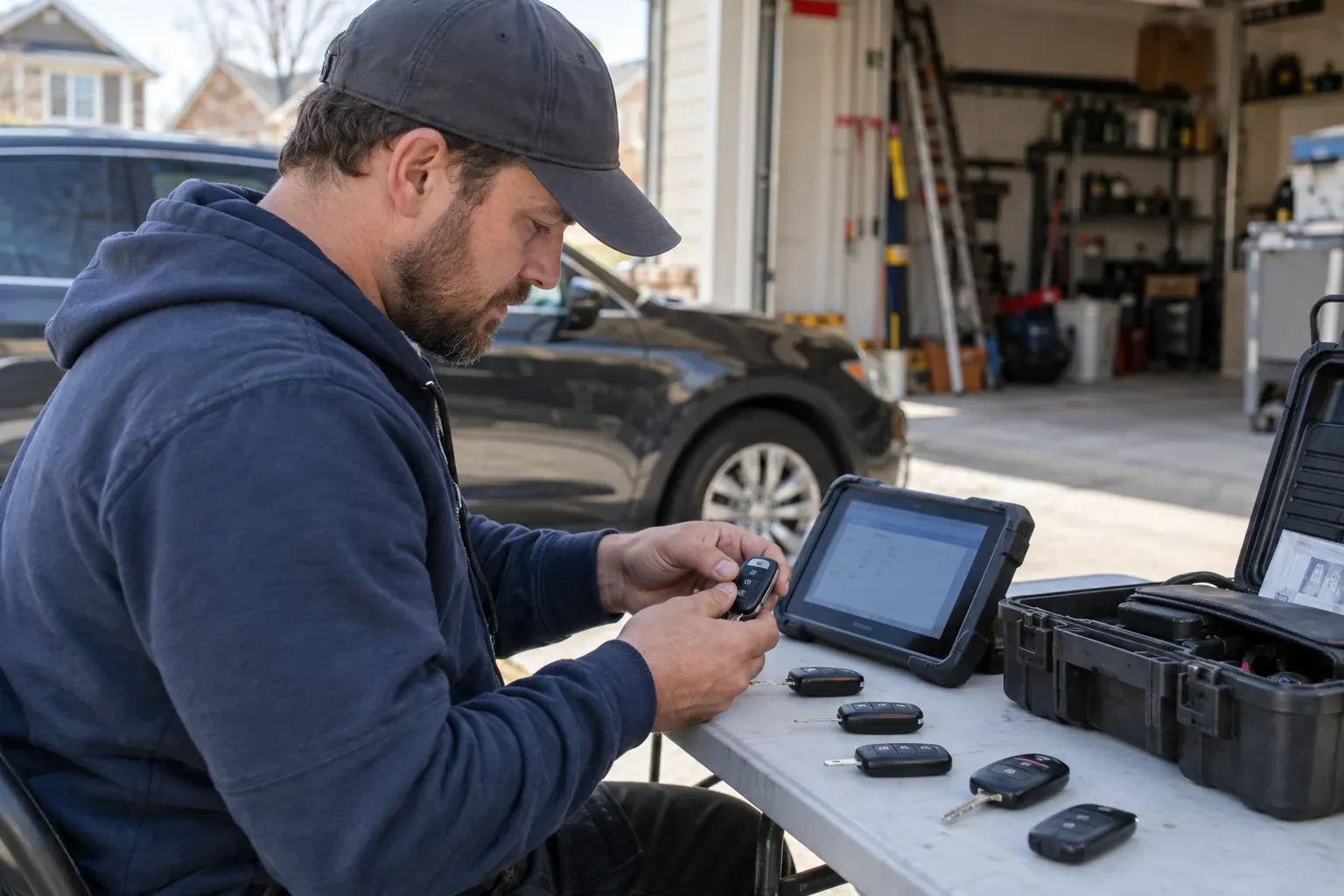
The visit runs in a steady order. On the phone you describe what was lost, which doors it opened and whether you have a way in. At the door the locksmith confirms your connection to the property, then walks it with you listing every cylinder. Each one comes off in turn, is repinned to the new key and refitted. The first key is cut to the new combination and checked in every lock, and the remaining copies are cut from it. Then every key is tried in every door with you watching, the count is agreed, and the new key code is written down for future copies.
How many keys, and who gets them
Before pins are touched, the number of keys is agreed, because that number is the whole point of key control. The locksmith asks who in the household or business needs one: each adult, a teenager, a caregiver, the neighbour who feeds the cat, the landlord, the cleaner. Each name gets a key and the total is written down. Anyone who had a copy of the old key but is not on the new list is, from that moment, simply someone without a key. Knowing the count on day one is what makes it possible, years later, to say with confidence exactly how many keys to this property exist.
Dealing with the electronic things on the ring
A rekey covers the mechanical keys; the visit also tidies what sat beside them. If a garage door remote was lost, the opener's memory is cleared at the unit on the ceiling so every remote is forgotten, and the ones still in the household are paired again. A keypad lock that shares a door with a rekeyed cylinder has its user codes reviewed and any code the lost ring's owner knew is changed. A building fob or parking card is reported to the property manager for deactivation, and the locksmith can make that call with you. A car key with a chip is booked as separate automotive work.
Spares that live outside the house
A rekey is the natural moment to decide where the spare goes, because the one under the planter is the reason many of these calls happen. A key with a trusted neighbour or nearby relative is the simplest answer. A small combination lockbox fixed in a discreet spot, with the code shared only with the people on your list, is a step up and can be fitted before the locksmith leaves. For families with a keypad lock, a personal code for each member does the same job without a key at all. Whichever you pick, the spare is now a planned thing with a known home rather than a habit.